


ATTENTION: FEMALE fitness
Professionals
Leading women & fitness trainers in menopause education.
CREATING NATIONS OF STRONG MENOPAUSAL WOMEN
Helping fitness professionals and business owners become trusted experts in menopause fitness & health through accredited education, practical coaching, and business support that integrates menopause training into real-life fitness offerings.
Earn More. Work Less. Specialise in Menopause.




Are you Struggling
with ....?
Understanding the science and practical implications of GLP-1 medications for weight loss with your female clients and how to adapt training/fitness programs for your menopause clients taking them
Understanding menopausal changes (for yourself and/or your clients!) and worry that you are not giving appropriate advice to your clients?
Being able to offer a holistic approach to your programs that includes nutrition, mental health and lifestyle adaptations suitable for peri/post menopause clients
Building a strong client base and supportive community where women feel understood and motivated
The overwhelm of time constraints running a business and managing ongoing education and personal development
Don't worry, I can help!
Who I work with...
FITNESS BUSINESS/gym owners
Wanting to offer Expert Menopause training to staff and unique workshops to female client base
fitness instructors/pt's
Wanting to Niche to Females 40+ and provide specialised programs for clients.
INFLUENCERS
Wanting to share quality, value based content around menopausal health and fitness
Nutritionists
Wanting to broaden expertise to offer exercise and fitness components for menopausal clients
PT Training Organisations
Wanting to provide more comprehensive training opportunities for students
How to work with me...

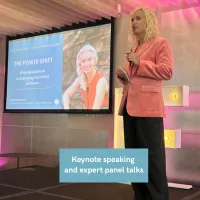
Book a presentation or keynote
for your
Trainers
Gain an understanding of the health risks and training adaptations needed for women in peri & post menopause with an online webinar or keynote specific to fitness professionals

Book
Accredited Menopause Masterclasses
Get 'in gym' experience and learn how to implement key training diet and lifestyle strategies for your female 40+ fitness clients.
Boost your nutrition, recovery and program planning skills for this important demographic.

Join our
FREE
Community
Support your learning in the menopause space with this online education health hub community for both fitness professionals and women in menopause. Hear from industry experts, collect resources and get your questions answered inside the group.

Enrol in the
THRIVE course
Become a MASTER TRAINER in menopausal health & fitness with the THRIVE online menopause course.
With 12 months of practical coaching alongside the online course and business integration support, this is the best way to grow and scale your fitness business.
The #1 Menopause Holistic training system
What you will learn and be able to teach with us

Understanding hormonal shifts in peri/post menopause
Learn the physiological and psychological changes that happen through peri and post menopause

With Highly Educated Trainer
Learn from Mairi- a qualified Sport Scientist, physical therapist & clinical pilates instructor with over 20 years experience in the health & fitness industry

Offering nutrition, diet and lifestyle adaptations
Learn the best research based nutrition, and stress management advice to share with your female 40+ clients

Adapted exercise programs & recovery protocols
Learn the key training adaptations and recovery protocols best suited to a menopausal client

Total understanding of menopausal health risks, & injury management/prevention
Learn about the major health risks and how to adjust exercises to safely support your clients training outcomes

Marketing & Promotion to this client
Learn how to create irresistable offers, level up your marketing, scale and grow a thriving business and brand
Education and Collaborations with...

Educating, inspiring and collaborating with fitness professionals
Join the growing movement of qualified fitness professionals rising up to support women in menopause.
To date, I’ve educated over 200 students and trained more than 80 fitness and health practitioners to lead the way in menopausal health and fitness.
These trailblazers are creating menopause-specific programs, workshops, communities, and courses, transforming the lives of their clients and championing a new era in women’s health & fitness.

What's on offer after the training...
Ongoing Learning
Help to promote and teach
Community
Done for you products to sell
Tech support
You and your clients health journey through menopause is for the long term. There are no quick fixes when it come to improving health and fitness in peri and post menopause.
Become a life long learner, supporter, cheer leader and menopause champion for yourself and your clients and we will do the same for you.
MY APPROACH
Strengthening body mind and bones
When women gain strength, they gain empowerment.
Menopause is a time to step into our power with a strong body, resilient bones, and an unshakable mindset
Empower midlife women. Grow your business. Become a trusted expert in menopause fitness.
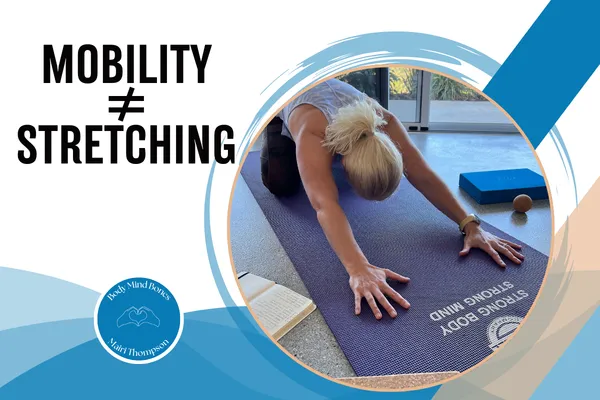
Menopause and Joint Mobility: Why Stretching Isn't Always Enough
Have you ever felt stiff through your shoulders or wrists, even when you stretch regularly?
You're not alone. Many women notice changes in how their joints feel and move during perimenopause and menopause. Reaching overhead, moving the shoulders backwards, or putting weight through the wrists may feel less comfortable than it used to.
While stretching can be useful, mobility work is another important piece of the movement puzzle.
At Body Mind Bones, I encourage women to look beyond stretching alone and consider how they can move their joints through their available range of motion with control, confidence and appropriate resistance.
Let's explore what mobility means, why it's worth including in your exercise routine during menopause, and two exercises you can try.
What is the difference between mobility and stretching?
Stretching generally focuses on lengthening muscles and other soft tissues to help improve flexibility.
Mobility, on the other hand, involves moving a joint through its available range of motion with control. Depending on the exercise, it may also involve a small amount of resistance.
Think of the difference this way:
Flexibility is about how much range of motion is available.
Mobility is about how well you can actively and comfortably move through that range.
Both can have a place in your exercise routine. However, mobility work can help you practice controlling movement rather than simply holding a stretch.
For example, being able to reach your arms overhead is one thing. Being able to move your arms overhead and back again with control is another.
Why does joint mobility matter during menopause?
During perimenopause and menopause, changes in estrogen levels can influence several tissues and systems throughout the body. Some women notice changes in joint comfort, stiffness or how easily they move.
Estrogen is involved in processes affecting connective tissues, and research continues to explore how hormonal changes may influence musculoskeletal health. However, joint stiffness is not experienced by every woman, and it can have many contributing factors.
This is one reason I encourage a well-rounded approach to movement during the menopause years, incorporating strength training, mobility, balance, recovery and appropriate cardiovascular exercise.
Mobility work may help you practice moving with control, maintain functional movement and prepare for the demands of your strength-training session.
The goal isn't to force your joints further. It's to help you move well within your current range.
Two shoulder mobility exercises to try
In my video, I demonstrate two exercises that focus on shoulder mobility, with the added benefit of incorporating wrist movement in the second exercise.
These may be useful additions to your warm-up, depending on your individual needs and abilities.
1. The shoulder pull-through
This exercise takes your arms through an overhead range of movement while you maintain gentle resistance.
How to do it:
Hold a suitable resistance band or exercise implement with both hands, using a grip that allows you to move comfortably.
Begin with your arms positioned in front of you, following the setup demonstrated in the video.
Slowly guide your arms up and overhead, moving through your available range.
Maintain gentle resistance and control as you bring your arms back through the movement.
Repeat for several controlled repetitions.
What to focus on: This isn't a competition to see how far your arms can travel. Focus on controlling the movement in both directions and keeping the resistance appropriate for your ability.
If your shoulders feel uncomfortable or you cannot complete the movement without forcing it, adjust your grip, reduce the range or choose a more suitable alternative.
2. The bodyweight shoulder extension exercise
The second exercise focuses on shoulder extension - moving the arms backwards relative to the body. This is a direction of movement that can be overlooked in everyday life.
The exercise also incorporates wrist movement, making it an opportunity to explore how these areas respond to a controlled bodyweight movement.
How to do it:
Begin in the position demonstrated in the video, with your hands supporting you behind your body.
Keep your feet close enough to your hips that you can move comfortably.
Gently lift your hips and move them towards your heels, allowing your shoulders and arms to move into extension.
Return to your starting position with control.
Repeat four or five times, staying within a comfortable range.
How to adapt it: Keeping your feet closer to your body can make the movement easier to manage. Moving your feet further away increases the challenge and may increase the stretch across the front of your shoulders and arms.
Only progress as far as you can comfortably control the movement. Pay attention to how your wrists feel, and don't force your shoulders into a deeper position.
If you have wrist or shoulder pain, an existing injury or difficulty supporting your bodyweight through your hands, seek guidance from an appropriate health professional or qualified exercise professional before trying this variation.
When should you include mobility exercises?
For many people, mobility exercises can be incorporated into a warm-up before strength training.
The movements you choose should relate to the session ahead. If you're planning to work your upper body, for example, controlled shoulder movements may be helpful preparation.
A few reminders:
Start with a range of motion that feels comfortable.
Move slowly enough to maintain control.
Use resistance that suits your current ability.
Avoid pushing into pain or forcing a joint into a position.
Adapt exercises to your mobility, strength and individual circumstances.
You don't need a long or complicated routine to begin exploring mobility. Consistency and appropriate exercise selection matter more than trying to achieve the biggest possible range of movement.
If stiffness is persistent, worsening or accompanied by swelling or significant pain, speak with a healthcare professional to help identify the cause.
Mobility is one part of the menopause movement puzzle
During menopause, it's easy to focus on one aspect of exercise - whether that's stretching, strength training or cardio.
But our bodies benefit from a more complete approach.
Alongside mobility work, strength training plays an important role in maintaining muscle and supporting bone health. Balance, cardiovascular exercise, recovery and adequate nutrition also contribute to overall health as we age.
The right combination will depend on your individual needs, health history and goals.
My aim at Body Mind Bones is to help women understand their changing bodies and feel more confident choosing movement that supports them through perimenopause, menopause and beyond.
Want more support with movement during menopause?
You don't have to navigate the menopause years alone. Having access to relevant education, practical movement guidance and a supportive community can help you feel more informed and confident about your health.
Join the Menopause Health Hub to connect with menopause-focused resources and support to help you on your journey.
Whether you're looking to learn more about movement, strength, mobility or bone health, the Hub is a place to continue building your knowledge and exploring ways to support your wellbeing through menopause.
👉 Join the Menopause Health Hub
I look forward to welcoming you!
Yours In Health,
Mairi
This article is for general educational purposes and is not a substitute for individual medical advice or assessment.


Online and in person learnings in menopause and your fitness business growth
When you empower yourself with knowledge, you can transform menopause into a time of strength for yourself and your clients
Menopausal health and fitness isn’t just about exercise, it’s about embracing a holistic approach that supports both body and mind.
The THRIVE course and MasterMIND goes beyond the basics of fitness , combining key training and exercise adaptations for menopause, science-backed nutrition advice, stress management tools, injury prevention strategies, and a comprehensive understanding of menopause symptoms and associated health risks. It also offers an online membership, plus coaching, fostering real connection with like-minded professionals while providing access to support, resources, and business-building strategies.
What makes THRIVE truly unique is the expertise and perspective behind it. With 20 years of experience in the health and fitness industry, I’ve worked globally from high-performance sport at the Olympic Games to clinical practice/local gyms and studios and everything in between.
As someone navigating peri-menopause myself, I bring both professional knowledge and personal insight to this course, ensuring it’s grounded in real-world experience and designed to meet the needs of fitness professionals and their clients.
What our client's say...
The THRIVE menopause course has been a game changer for me. It has greatly enhanced my capability to incorporate specialised fitness training for my clients, ensuring I can meet the unique needs of this demographic.
Mairi has also recommended software to help me streamline the way I do business with my own clients. All in all, I am very pleased to have come across Mairi and enrolled in the education she offered.”

Karen
Naturopath & Nutritionist
Taking Mairi's menopause course has taught me so many beneficial things about nutrition and exercise modifications needed in menopause. I am post menopausal and have osteoporosis and there are plenty of exercise adaptations for me. The course offers a wide range of topics for exercise and wellbeing and Mairi is more than willing to answer questions and keep in contact with you throughout. I would recommend this course to any women in peri or post menopause.


Kim
I have now completed two of Mairi's courses. Mairi is the best mentor and coach you could ask for. Her courses are easy to follow, extremely informative and Mairi is always there to help you with any questions. She shares her wealth of experience and knowledge with you in terms you will find easy to understand. If you are wanting to help your female clients train during the menopausal years I can't recommend Mairi highly enough to support you on this journey.

Sara
PT & Gym instructor
"If you want to Learn something, read about it. If you want to Understand something, write about it. If you want to MASTER something, teach it."
- Yogi Bhajan-
Educating and collaborating with fitness professionals to create Nations of Strong Menopausal Women.
LET'S WORK TOGETHER

© Body Mind Bones 2026. | All Rights Reserved.
© Body Mind Bones. 2026 All Rights Reserved.